
At a glance: Palazzo Altemps in 30 seconds
📋 Quick summary
| Address | Piazza di Sant'Apollinare 46, Rome (200 m from Piazza Navona) |
| Full-price ticket | € 8 (covers all 4 Museo Nazionale Romano sites for 7 days) |
| Opening hours | Tuesday – Sunday, 09:30 – 19:00 (last entry 18:00) |
| Closed | Monday, December 25, January 1 |
| Booking | Recommended at weekends and during peak season |
| Visit duration | 1.5 – 2 hours (compact collection, logical layout) |
| Accessibility | Yes — lifts and step-free routes throughout |
Data verified from the official website museonazionaleromano.it. Prices and hours may change — always check before your visit.
What is Palazzo Altemps and why it's worth your time
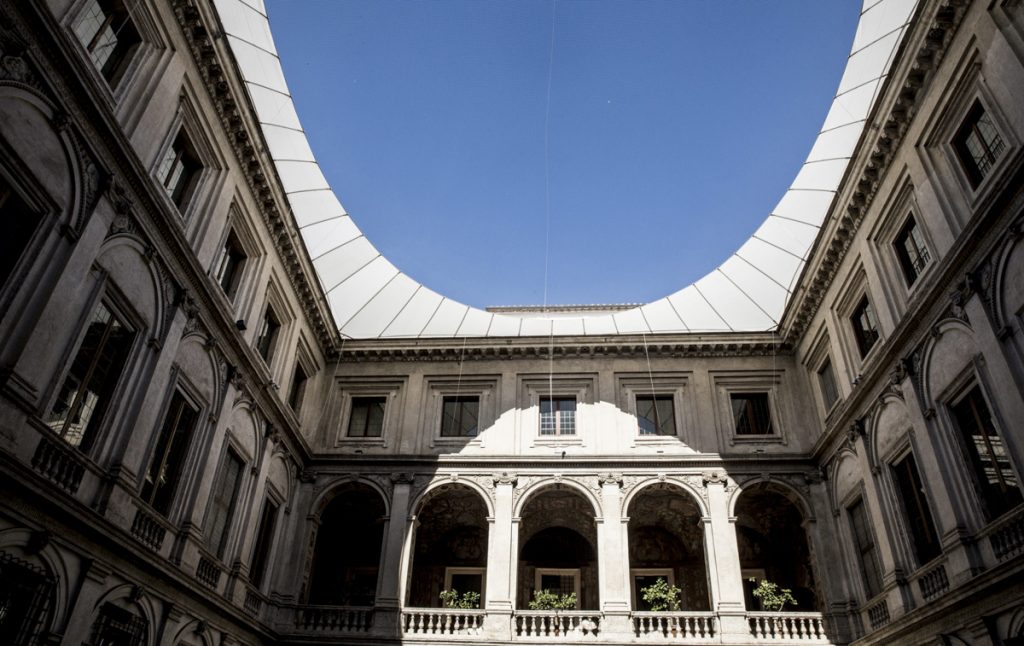
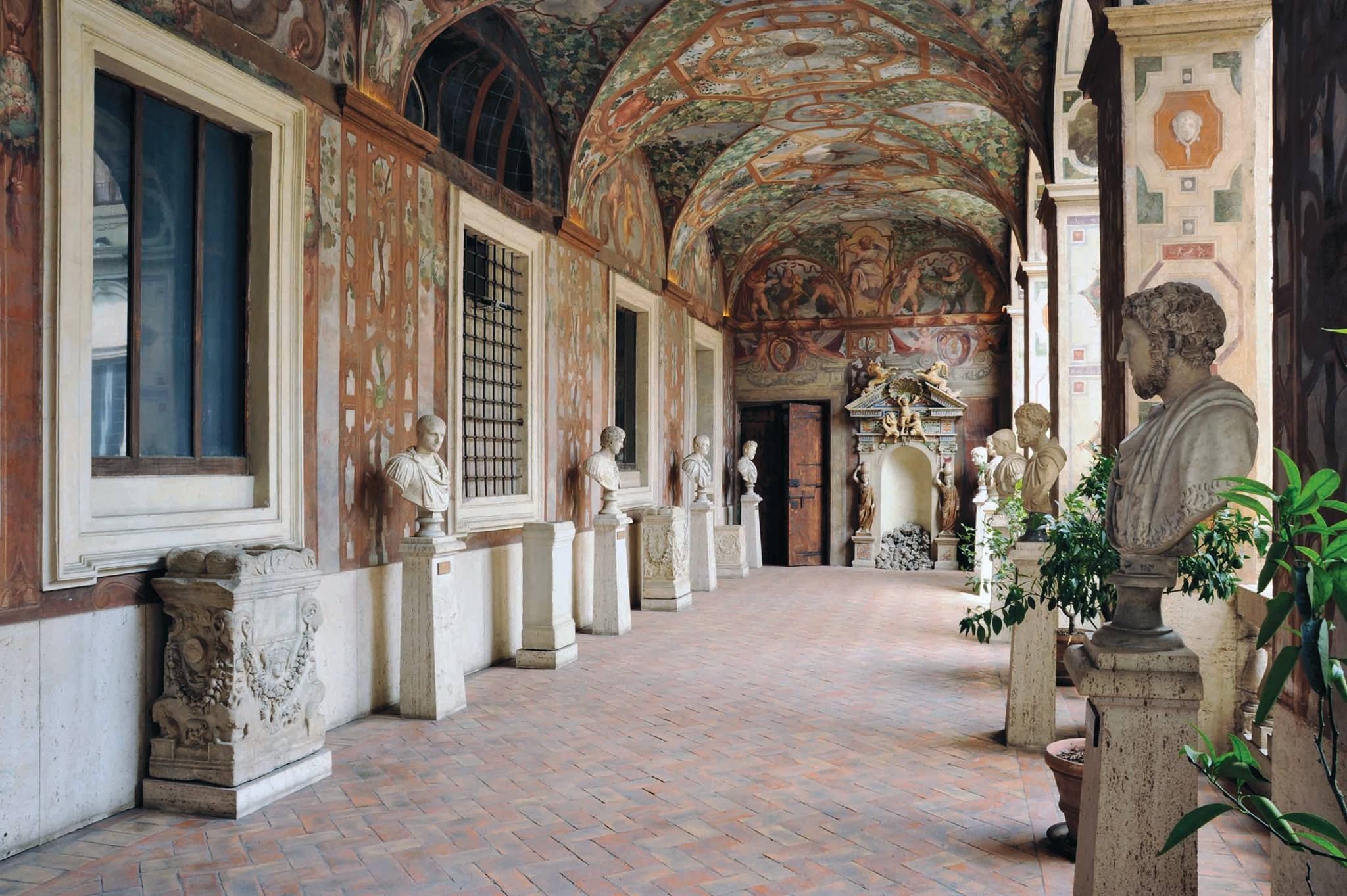
Palazzo Altemps is one of the four sites of the Museo Nazionale Romano, alongside Palazzo Massimo, the Baths of Diocletian and Crypta Balbi. What makes it special is that the museum was never purpose-built as an exhibition space: it occupies a sixteenth-century Renaissance noble palace, originally built for the Riario family and later acquired by the Altemps family. Visiting it means navigating two layers of history simultaneously — Greek and Roman sculpture on the ground floor and piano nobile, set against the Renaissance architecture of the rooms, painted ceilings and the arcaded courtyard.
The main collection is the Boncompagni Ludovisi, assembled by Cardinal Ludovico Ludovisi in the seventeenth century: 104 ancient sculptures purchased to furnish his villa on the Quirinal Hill, then transferred to the state collections in 1901. Many pieces were restored in the 1600s by sculptors of the calibre of Gian Lorenzo Bernini and Alessandro Algardi, who filled in missing sections, reattached heads and carved entirely new limbs. The result is a fascinating layering of eras: behind a second-century torso you might find a Baroque intervention by one of the greatest sculptors in the history of art.
Why we recommend it (our honest opinion)
After years of guiding visitors around Rome, we've noticed a clear pattern: people who walk into Palazzo Altemps with low expectations leave pleasantly surprised. The museum is nothing like the Vatican Museums — it's quiet, intimate, the kind of place where you can stand in front of the Ludovisi Throne for ten minutes without anyone jostling you. For travellers who have already done the Colosseum and the Vatican and are looking for a slower, more contemplative experience, it's one of the best choices in the whole city.
💡 Expert tip
Your Palazzo Altemps ticket is actually a combined ticket for all four museums (Palazzo Massimo, Baths of Diocletian, Crypta Balbi and Altemps), valid for 7 days. If you have time, spread the four visits across different days — the value for money becomes unbeatable for Rome.
Explore the guide by topic
We've organised everything into themed pages. Pick the one you need.
What to see
The 10 must-see works: Ludovisi Throne, Galatian Suicide, Ludovisi Ares, Great Ludovisi Sarcophagus. A visit route to follow in order.
Go to the works guide →
Visitor guide
History of the palace, suggested route, realistic timings, how to move between rooms and the courtyard. Everything you needed to know before going.
Read the full guide →
Tickets and prices
Up-to-date official prices, concessions, the first Sunday of the month free, and a comparison of all purchasing options.
See all prices →
Opening hours
Weekly schedule, public holidays, last entry time, special-event hours. Updated for 2026.
Check opening hours →
Guided tours
The best guided visits in English, Italian and other languages. Combo tours with other museums and private tours for small groups.
Browse tours →
Ticket price
Full breakdown of costs: full price, concessions, free admission. Combined passes such as the Roma Pass. When each option makes sense.
Compare prices →Getting here: the entrance almost nobody knows about
The official address is Piazza di Sant'Apollinare 46, but the neighbourhood is Piazza Navona — all narrow lanes, limited-traffic zones and taxis that struggle to stop. Here's the real story on getting here without wasting time.
On foot (recommended)
- From Piazza Navona: 3 minutes. Exit from the north end (near the church of Sant'Agnese in Agone), take Via dell'Anima, turn right into Via di Sant'Apollinare. The entrance is right there.
- From Castel Sant'Angelo: 10 minutes via Ponte Umberto I.
- From the Pantheon: 7 minutes along Corso del Rinascimento.
By public transport
- Bus: lines 30, 70, 81, 87, 116, 492, 628 — stop at Corso Rinascimento or Senato.
- Metro: no nearby stop. The most convenient is Spagna (line A), then 15 minutes on foot, or Barberini with bus 81.
- Taxi: ask to be dropped at Piazza Navona, north side — taxis cannot enter the ZTL pedestrian zone.
🎯 The "secret" group entrance
If you're travelling with an organised group, there is a separate entrance on the Via dei Soldati side. Professional guides use it to avoid the main ticket queue. For individual visitors the entrance remains at Piazza Sant'Apollinare, but if you've booked online you can go straight to the turnstile without queuing at the ticket desk.
When to go: the golden hour for photos
Palazzo Altemps never has queues to rival the Vatican Museums, but there are still time slots that make a real difference if you want crowd-free photos or a contemplative atmosphere.
Best times to visit
- 09:30 – 10:30: opening time. Rooms are practically empty and the natural light in the courtyard is warm and beautiful.
- 14:00 – 15:30: the last organised groups have left and the next wave hasn't arrived yet. Excellent for photographing the Ludovisi Throne.
- 17:30 – 18:00: last entry. You have 60 minutes for a complete circuit — perfect if you're short on time and want an intimate atmosphere.
Times to avoid
- First Sunday of the month: free admission, which means queues and packed rooms. Great for your wallet, terrible for tranquillity.
- Saturday 11:00 – 13:00: peak tourist hours for people combining Navona, the Pantheon and Altemps in one morning.
- August afternoons: not all rooms are air-conditioned. Come in the morning.
How to save on tickets
The full price is already modest by Roman museum standards, but there are discounts and formulas that can bring it down even further.
| Category | Price | Notes |
|---|---|---|
| Full price | € 8 | Includes all 4 Museo Nazionale Romano sites |
| Concession (EU 18–25) | € 2 | Photo ID required |
| Under 18 | Free | EU citizens |
| EU teachers | Free | Valid staff card required |
| Disabled visitors + companion | Free | Supporting documentation required |
| First Sunday of the month | Free | For everyone — no booking available |
| Roma Pass 48h / 72h | € 32 / € 52 | Includes this museum and others |
Prices verified on the official website museonazionaleromano.it (January 2026). Subject to change.
The 5 works that alone justify the ticket price
If you have less than an hour and want to see the absolute best, here's the list — personally tested and ranked by emotional impact and historical significance.
1. The Ludovisi Throne
Upstairs in the piano nobile, Throne Room. This is a Greek high-relief from the fifth century BC showing a female figure — most likely Aphrodite — rising from the sea, supported by two attendants. The surface has a smoothness that still seems impossible to replicate. The wet-drapery effect is considered one of the pinnacles of Classical Greek sculpture.
2. The Galatian Suicide (Ludovisi group)
A Roman marble copy of a Hellenistic bronze original from the third century BC. A Galatian warrior, defeated in battle, kills his wife and then himself rather than face enslavement. The tension in the body and the expression on the warrior's face have been studied in art academies for centuries. You will inevitably stop and stare.
3. The Great Ludovisi Sarcophagus
A Roman sarcophagus from around 250 AD, 1.5 metres tall, with a battle scene between Romans and barbarians carved in high relief. The density of the composition — more than forty interlocked figures — and the depth of the modelling are spectacular. Look at it from several angles to appreciate the full design.
4. The Ludovisi Ares
A Roman copy of a fourth-century BC Greek original, restored by Bernini in 1622. The god of war sits in repose, pensive, with Eros at his feet. Bernini added the sword hilt and part of the right foot — an exercise in Baroque philology you can pick out if you know where to look.
5. The arcaded courtyard
Not a sculpture — an architectural space. But it earns its place here. The courtyard is one of the purest examples of Roman Renaissance architecture: harmonious proportions, three superimposed loggias, a dedicatory Latin inscription at the centre. In summer it is shaded and cool, perfect for a mid-visit pause.